

Choosing the right outdoor sofa in Australia is not a matter of taste alone. Our climate is unforgiving, varied, and at times extreme. Coastal salt air, intense UV exposure, sudden summer downpours, tropical humidity in the north, dry heat inland, and cool winters in the south all place very different demands on outdoor furniture. Nowhere is this more apparent than when comparing two of the most respected materials in luxury outdoor living: solid teak and architectural-grade aluminium.
Both materials are widely regarded as premium choices. Both are used in high-end resorts, luxury residences, and carefully curated outdoor spaces. Yet they behave very differently once exposed to Australian conditions year after year. Understanding these differences is essential if you want an outdoor sofa that not only looks exceptional on day one, but continues to perform, age gracefully, and provide long-term value.
This guide draws on real-world experience with outdoor furniture in Australian conditions, manufacturing knowledge, and long-term ownership outcomes. It is written to help discerning buyers make an informed decision based on climate performance, durability, maintenance expectations, comfort, and lifestyle alignment.
Australia is not a single climate zone. A sofa that performs well in Melbourne’s cooler, variable weather may struggle in Darwin’s humidity. A piece suited to a protected inner-city courtyard may deteriorate quickly beside the ocean.
Key environmental factors that influence outdoor sofa performance include:
Any serious comparison between teak and aluminium must be viewed through this lens.
Teak has been used outdoors for centuries. It has furnished ship decks, colonial verandas, luxury resorts, and garden estates long before aluminium furniture existed. Its reputation is not based on fashion, but on proven performance.
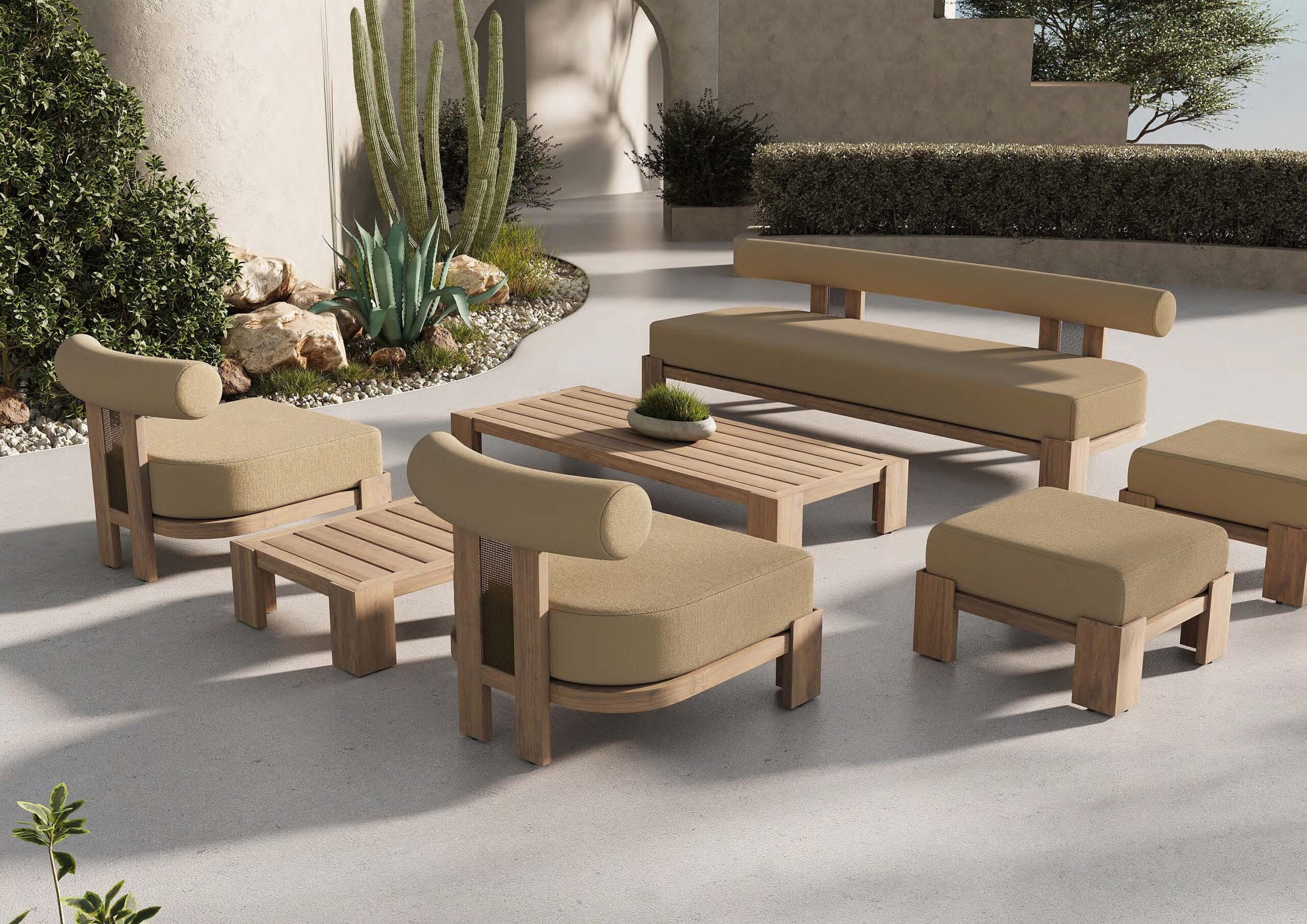
Teak is a dense hardwood rich in natural oils and silica. These oils act as an internal barrier against moisture absorption, insect attack, and decay. Unlike many timbers, teak does not require chemical treatment to survive outdoors.
When used correctly, solid teak offers:
In Australian conditions, these properties are particularly valuable in coastal and humid regions.
Exposure to UV does not weaken teak structurally. Instead, it changes its appearance. Over time, untreated teak develops a soft silver-grey patina. This is not deterioration; it is surface oxidation.
Many owners consider this ageing process part of teak’s charm. Others prefer to retain the original honey-gold tone through periodic oiling. Importantly, this is an aesthetic choice, not a structural necessity. Even in extreme heat, teak remains comfortable to touch, unlike metals that absorb and radiate heat rapidly.
Teak performs exceptionally well near the ocean. Its natural oils resist salt penetration, and it does not rust or corrode. In high-humidity zones, teak is far more forgiving than many materials, provided it is properly seasoned and constructed.
However, teak is not maintenance-free. In shaded, damp areas, surface mould can develop if the timber is not cleaned periodically. This is cosmetic and easily managed but should be acknowledged.
Aluminium is the material of choice for modern outdoor architecture. When engineered correctly, it offers a combination of strength, lightness, and design flexibility that timber cannot replicate.
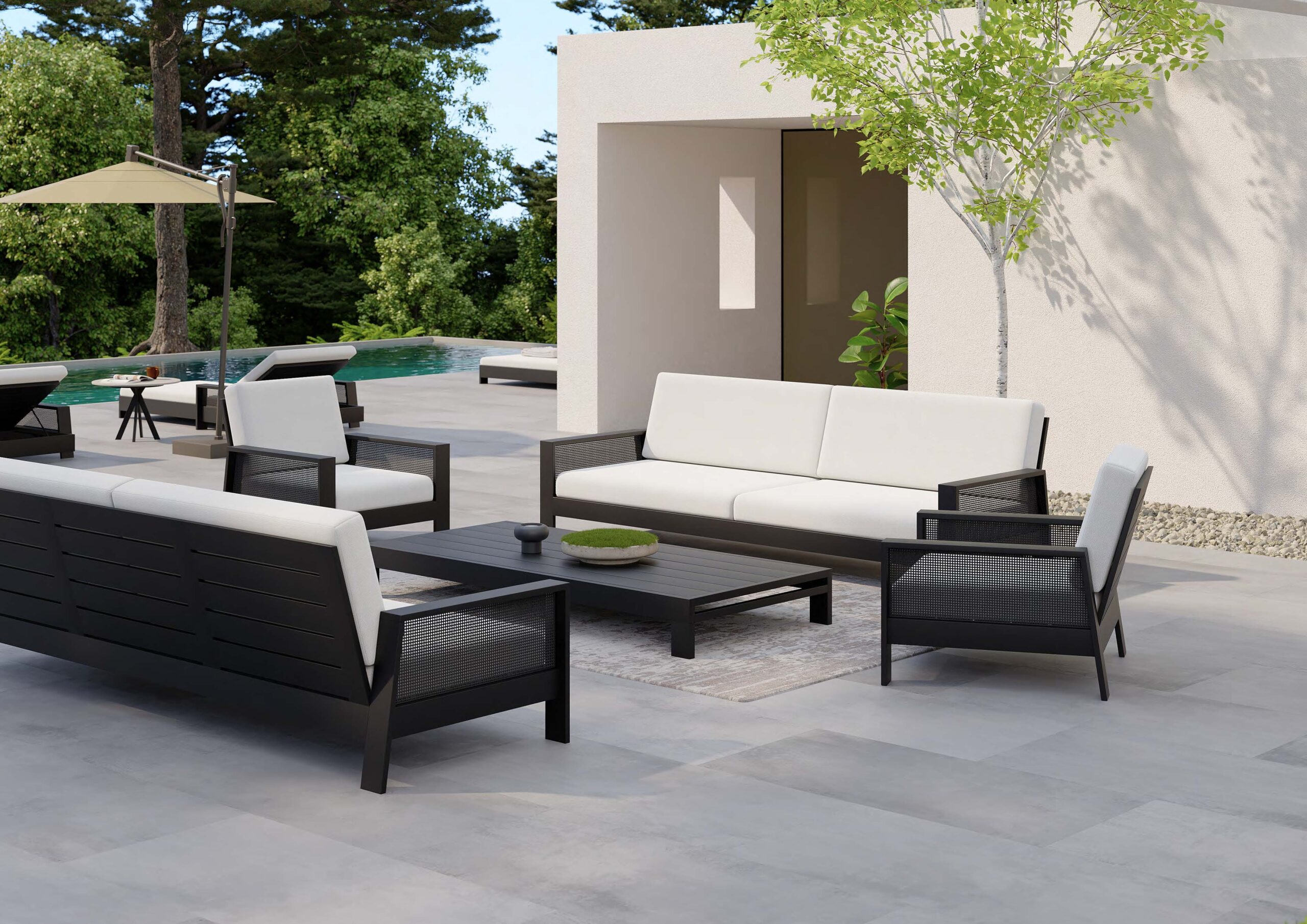
Not all aluminium furniture is created equal. High-quality outdoor sofas use thick-walled, powder-coated aluminium frames designed specifically for external use.
Key benefits include:
In Australia, aluminium’s resistance to moisture and temperature fluctuation is a major advantage.
Aluminium does not degrade structurally under UV exposure. The frame itself remains stable for decades. The critical factor is the quality of the powder-coat finish.
Premium powder-coating systems are UV-stabilised and designed to resist fading, chalking, and peeling. Inferior finishes, often found on mass-produced imports, can fail quickly under Australian sun.
One practical consideration is heat retention. Aluminium frames exposed to direct sunlight can become hot to touch. In well-designed sofas, this is mitigated through cushioning, airflow, and thoughtful design, but it remains a characteristic of the material.
Properly powder-coated aluminium performs exceptionally well near the ocean. Unlike steel, it does not rust. Unlike timber, it does not absorb moisture. This makes aluminium particularly appealing for exposed coastal decks, rooftop terraces, and poolside areas where salt spray and humidity are constant.
Longevity is not simply about surviving outdoors; it is about how a sofa looks and feels after five, ten, or fifteen years.
Teak ages visibly but predictably. Its structure remains sound while the surface evolves. With minimal care, a solid teak sofa can last decades. Joints remain strong, frames retain integrity, and the timber continues to perform long after cheaper alternatives have failed.
The key risks with teak are not environmental but manufacturing-related. Poor joinery, insufficient seasoning, or thin timber sections will compromise performance regardless of climate.
Aluminium frames retain their shape and strength indefinitely. The frame will typically outlast other components such as cushions or fabric. The primary determinant of longevity is finish quality. High-end powder-coating systems maintain their appearance for many years, while inferior coatings can deteriorate prematurely.
Outdoor furniture must be lived in, not admired from a distance.
Teak remains thermally neutral. Even in summer, it is pleasant to sit on and does not feel harsh against bare skin. Aluminium requires more consideration. Dark frame colours can absorb heat, while lighter finishes reflect it. Cushioning plays a crucial role in comfort, especially during peak summer temperatures.
Teak is heavy. This makes it exceptionally stable in windy conditions, an important consideration in coastal and elevated locations. Aluminium is lighter, which can be an advantage for reconfiguring spaces but may require design solutions to prevent movement in exposed areas.
Luxury does not always mean maintenance-free, but it should mean manageable.
Teak requires periodic cleaning to remove surface dirt and prevent mould in damp areas. Oiling is optional and purely aesthetic. Owners who appreciate natural ageing often do very little beyond basic cleaning. Those who prefer a golden appearance should expect occasional oiling.
Aluminium requires minimal upkeep. Occasional washing with fresh water is sufficient, particularly in coastal environments to remove salt residue. The finish does not require sealing or oiling, making aluminium attractive for owners seeking a low-intervention solution.
Modern luxury outdoor living is rarely one-size-fits-all. High-end aluminium sofas excel in precision design. Clean lines, slim profiles, and modular configurations are easier to achieve with aluminium framing. Teak offers a more organic presence. It suits spaces where warmth, texture, and natural materials are central to the design vision.
Importantly, premium outdoor sofas today are fully customisable. Dimensions, configurations, and finishes can be tailored to suit individual spaces. At the highest level, aluminium outdoor sofas are available in eight distinct frame colours and can be paired with over 300 premium outdoor fabric colours, with pricing remaining the same regardless of selection.
Sustainability is increasingly important to Australian buyers. Responsibly sourced teak from managed plantations is a renewable material with an exceptionally long lifespan. Aluminium is fully recyclable and can be reprocessed indefinitely without loss of quality. Both materials can be sustainable when sourced and manufactured correctly. Transparency in supply chains is essential.
There is no universal answer, only the right answer for your environment and lifestyle.
Teak is ideal if you value natural warmth, traditional luxury, and a material that tells a story as it ages. It excels in coastal and humid regions and offers unmatched tactile comfort.
Aluminium is ideal if you prioritise modern design, low maintenance, and structural precision. It performs exceptionally well in harsh climates and contemporary architectural settings.
Many of the most sophisticated outdoor spaces combine both materials, using teak for warmth and aluminium for structure and contrast.
The most important factor is not teak versus aluminium. It is quality versus compromise. Poorly made teak will fail faster than well-engineered aluminium. Cheap aluminium with inferior coatings will degrade faster than properly constructed timber. Luxury outdoor sofas must be designed for Australian conditions from the outset. When that standard is met, both teak and aluminium can deliver exceptional long-term performance.
See more at www.theexclusivehome.com.au